Our growers are working with a range of providers to capture, integrate and organise our data to help make better decisions.
Across our farms we are creating vast quantities of data points through our growing and harvest operations.
Our strategy is to capture and better understand our data, putting the data in our growers hands to ensure they are optimising operational decision making to do more with less.
Some of our key projects are headlined below.
Reducing Nitrogen Use (VRN)
Managing fertiliser application to reduce food waste
Globally, fertiliser production and use emits more CO2e per year than aviation and shipping combined.
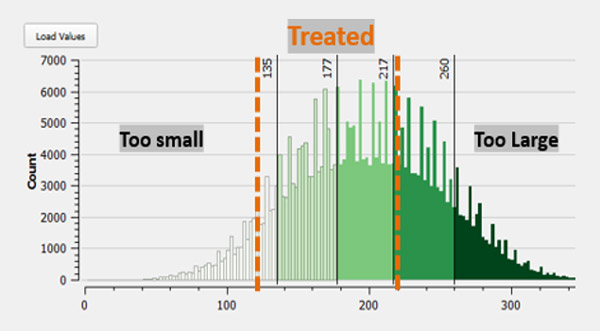
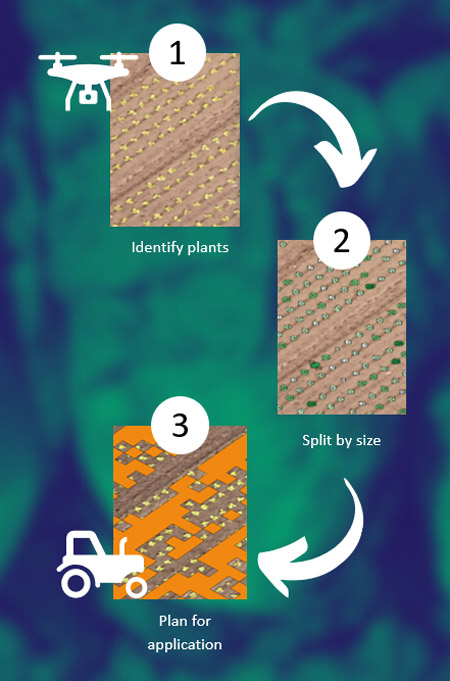
Using drone imagery, we classify the size of the lettuce in the field and only apply fertilizer to those individual plants which need it.
To treat each plant, we divide each hectare into over 100,000 blocks and decide whether or not to fertilise each one of them.
Last season, in trials we saved 70 Tones of CO2e.
Land Use Optimatisation
Increasing biodiversity and reducing soil erosion in our field margins
Soil is our most valued resource, and we are striving to protect it by applying Regenerative Agriculture principles.
Precision farming technologies have been applied over 1,500 Ha to reduce our impact in the soil and reduce inputs.
Reduction of soil compaction on non-cropped areas
Ability to plan biodiversity corridors and experiment with the introduction of pests’ predators
Maximizing Varietal Selection
Due to variation on soil properties, different individual varieties can perform differently across the field
The goal is to match varieties capabilities/strength with soil properties.
This may create some difficulties in planting operations but will bring other benefits such as more tailored irrigation regimes, reduced fertilizer inputs according to individual variety needs.
Better variety planning is estimated to increase yield by 3% and bring other benefits such as improved harvest operation efficiency.
Reducing Base Fertiliser
Variable Pre-Planting Application
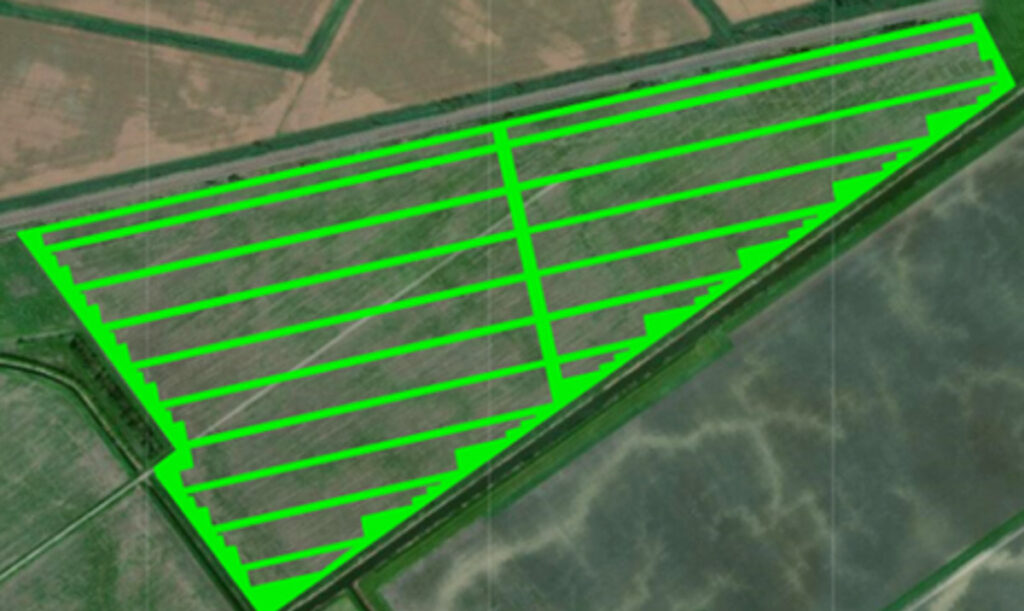
The current technology on the power harrow allows our growers the scope to vary base application on a 7.5m width, shifting the rates up to 50%, if required.
Targeting precise volumes of fertilizer will increase the opportunity to enhance poor performing zones, increasing the likelihood of those plants to achieve harvest specification. Whilst reducing variability on high-performance areas by cutting inorganic amendments.
During summer, base application can be reduced by 10% resulting in reduced plant variability on high performing areas by 5%.
Putting data at our growers’ fingertips
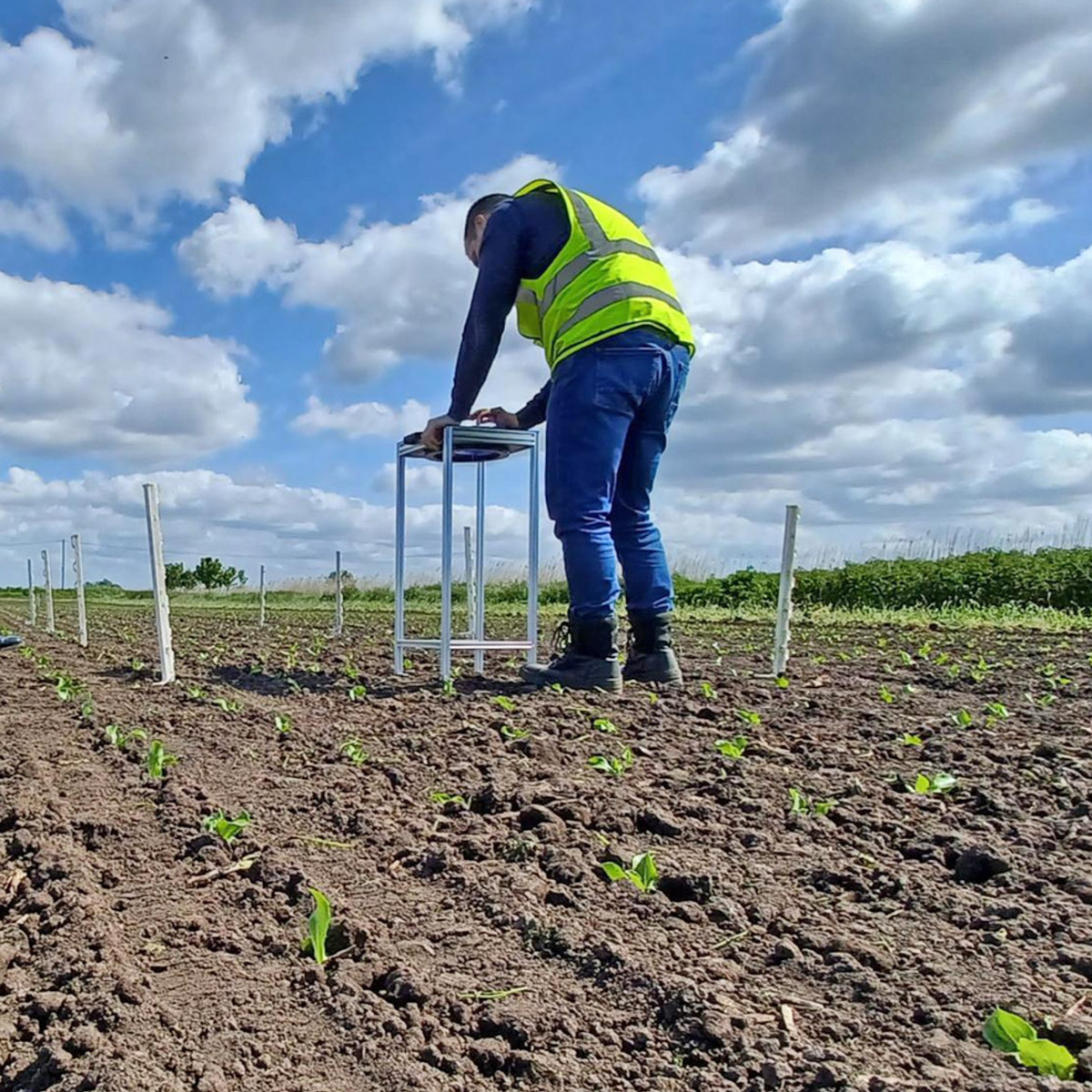
We have developed apps to provide us with live data across our farming operations. Below is an example of our crop walker app:
Omnia TerraMap
Highlighting variations in our soils for clearer insight of field performance
TerraMap enables our growers to better understand their soils to maximise the opportunity of precision technology and create variable rate plans.
Over the past three years we have TerraMaped all our farms in East Anglia.
How TerraMap works
The field is scanned with TerraMap and reference soil samples taken.
TerraMap uses passive, gamma-ray detection technology to measure Caesium, Uranium, Potassium and Thorium isotopes.
The raw scan, soil data and soil samples are processed for high resolution maps of all common nutrient and physical soil properties, at 800 sample points per hectare.