
Mechanised Harvest
Cutting and packing of wholehead lettuce is still primarily done by hand, making it a very labour-intensive job. Throughout the supply chain, all stakeholders recognise the importance of mechanizing the harvesting process.
Core to our strategy is to reduce our reliance on season labour through the increased use of automation and continuous improvement in our operations. We are running a number of exploratory harvest automation projects with industry experts, international growers and academic partners. Our research is integrated through the supply chain, and we are working closely with the leading global seed companies and their breeders to optimise crop presentation for ease of autoharvest capability. However, we can’t expect an overnight success and projects will take several years to come to commercial fruition.
A number of work-streams are being worked on with seed and technology partners looking at genetic traits of lettuce varieties that allows plants to present themselves in a way that is optimum for handling though our various proposed auto harvest solutions. This includes shape of plant, presentation of the base and how the outer leaves fall away on cutting.
We are working with machinery companies, academic institutes and global salad growers to find optimised mechanisation solutions. Over the years we have continuously improved rig productivity, and we continue to seek a suitable mechanisation solution to replace hand harvest.”
How does mechanical harvesting of lettuce work?
There are emerging varieties of lettuce with an elongated stem, enabling us to cut the stem underneath the head. This gives more opportunities for technical solutions of cutting by machine.
The seed companies are progressing differentiated varieties for the processing industry which deliver a product with the same eating characteristics, but do not necessarily require the same visual head shape as is the case with whole head retail presentation.
Customers, processors, growers, seed companies and machine manufacturers all have an influence on the direction of development. We need insight and alignment throughout the supply chain to keep developing both genetically and technically.

Current G’s project include:
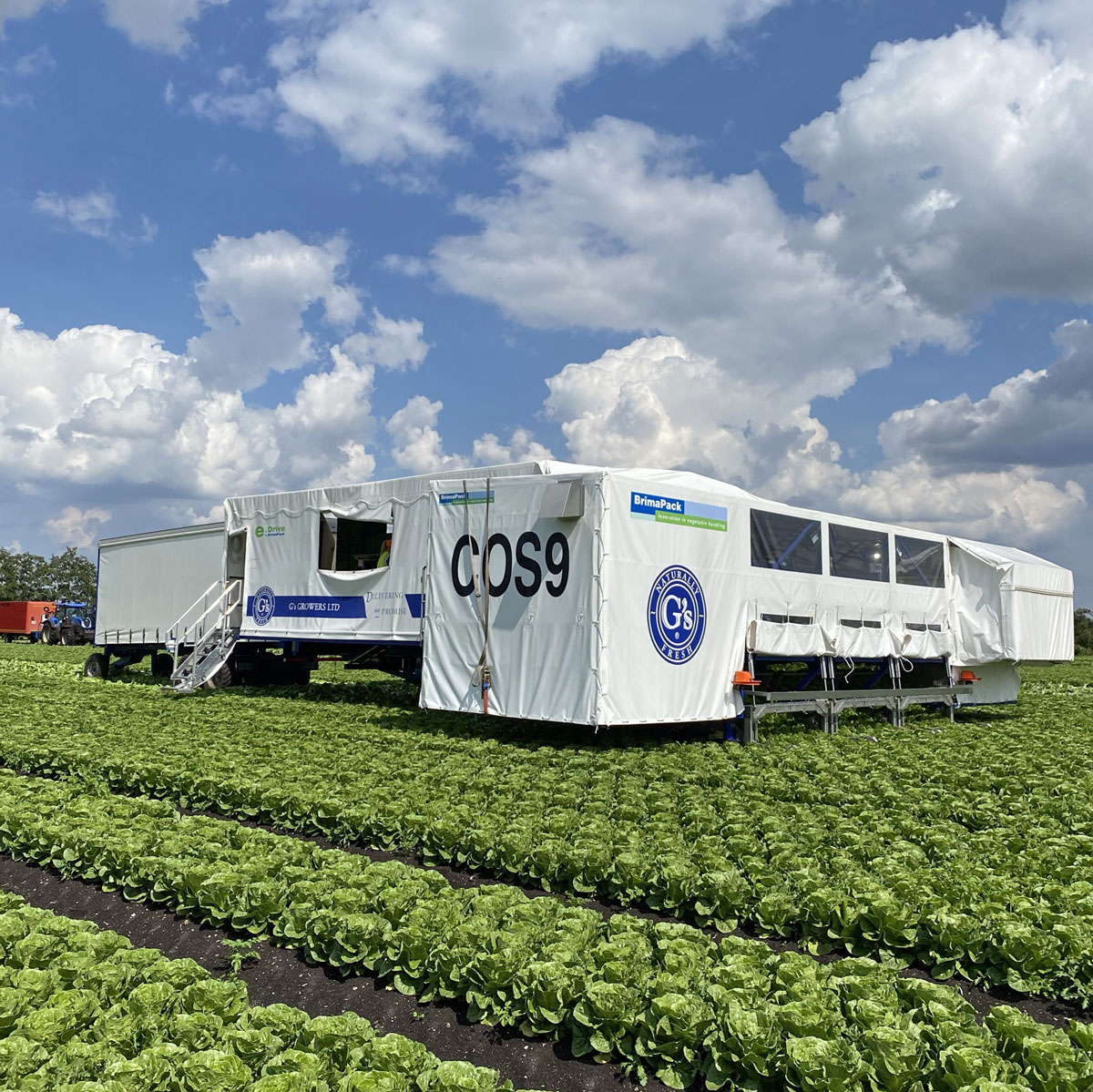
Romaine: Built in conjunction with Brimapack, COS9 has been operating commercially in the UK for two seasons. The machine utilises 3 independently controlled lifting belts presenting 20 rows of cut crop to operatives for collection of the heart and trimming when required. Initial trials show this 3 bed harvester is 30-40% more efficient than a standard harvest rig if operating in optimised conditions.
Robotic Harvesters Research: G’s have explored various project with university partners and US based growers. Our robotic arm concept utilises a Phenospex vision system to scan the crop and then a robot grips, cuts and places the lettuce on a conveyor.
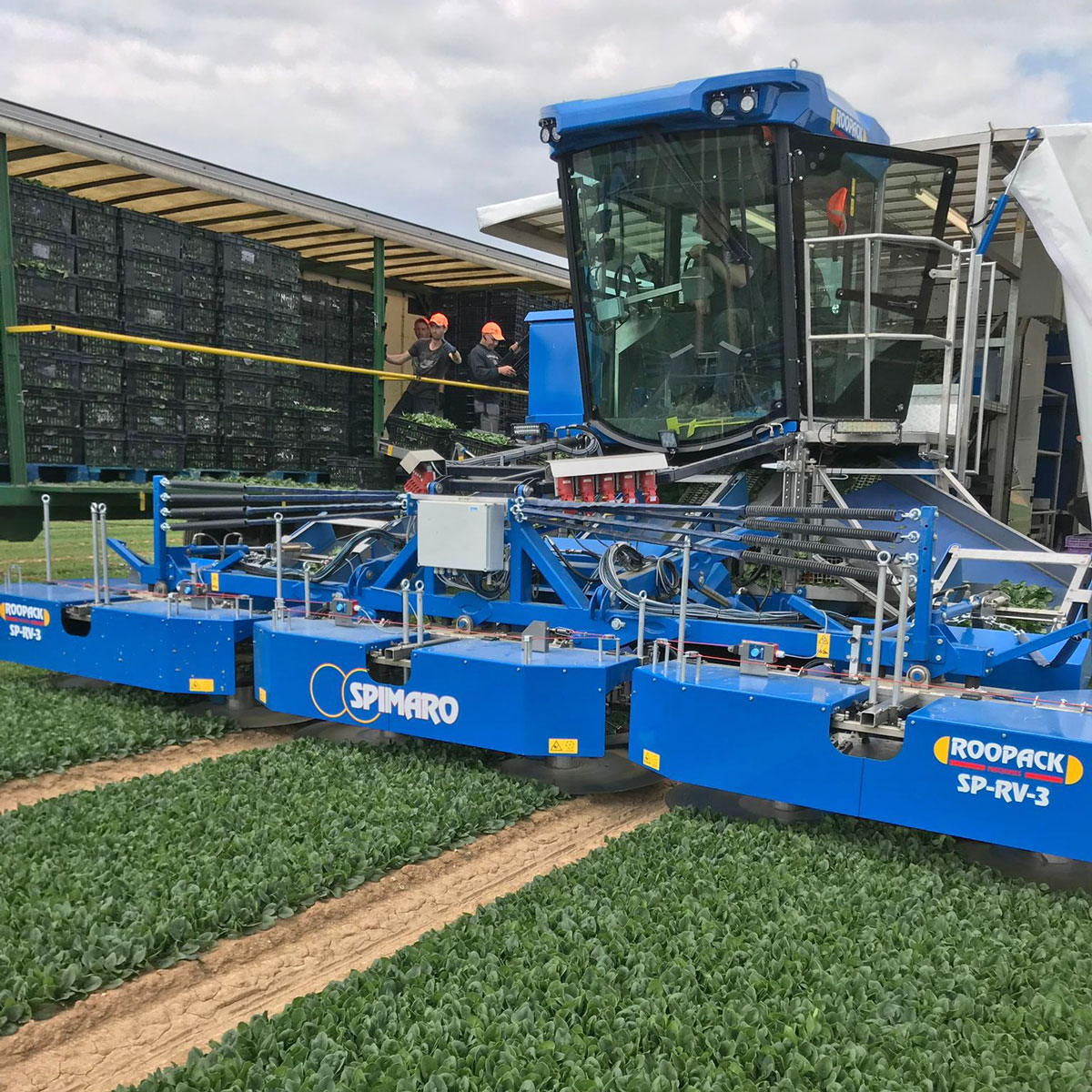
Baby Leaf & Whole Head Process Technology is being replicated in Sussex as well as cutting whole head product with the Roopak harvester for further processing material through optimisation of blade cutting height.
Celery Rig 20 has been in operation in the UK for the past 6 years, auto cutting our tall celery varieties for processing in the factory into stick pack products.